Friday, June 21, 2024

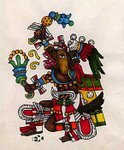
full moon: The moon full of light


The moon, full of light,
bathes the valleys and the hills,
spills onto the roofs. 
We look for it to dispel
the deep darkness of the heart.


                    © Rafael Jesús González 2024


La luna llena de luz
baña los valles y las colinas,
se desborda en los techos. 
La buscamos para disipar
la honda oscuridad del corazón.


                         © Rafael Jesús González 2024


Thursday, June 20, 2024

Summer Solstice


Nos llega el Solsticio de verano, un regocijo de luz. Pero el mundo se encuentra en profunda oscuridad, en tormenta. Encontrar la claridad y la calma, el ojo de la tormenta, es un reto. Busquemos la claridad y calma dentro nosotros; de fuera no nos vendrá. Es preciso para ser y hacer nuestra revolución de corazón y consciencia para sanar a la Tierra y traer la justicia y la paz.


The Summer Solstice comes, a joy of light. But the world finds itself in deep darkness, in a storm. To find the light and calm, the eye of the storm, is a challenge. Let us look for clarity and calm within ourselves; it will not come from outside. It is necessary for being and making our revolution of heart and consciousness to heal the Earth and bring justice and peace. 


Cancer 
y el solstocio veraniego
Summer Solstice


-
--

                    
Cáncer


El cangrejo anhela,
al fin del largo día,
arrancar del cielo
esa moneda de plata fría
que es la luna.
    Sus ojos son cuentas de rubí
    y en las entrañas
    guarda una perla sensitiva
que anhela llevar muy hondo,
                            
muy hondo
al punto cardinal del agua,
    al fondo primordial del mar.


                    © Rafael Jesús González 2024


                Cancer


The crab longs,
at the end of the long day,
to tear from the sky
that coin of cold silver
that is the moon.
    Its eyes are ruby beads
    & in its entrails
    it keeps a sensitive pearl
which it longs to carry very deep,
                                    
very deep
to the cardinal point of the waters,
    the primordial depths of the sea.


                            © Rafael Jesús González 2024


Wednesday, June 19, 2024

Juneteenth


Juneteen marks the date of June 19, 1865, two and a half years after the Emancipation Declaration, that more than 250,000 slaves in Texas were told that they were free with "absolute equality of personal rights and rights of property between former masters and slaves . . ." — a Texas holiday that became national in 2021 whose promise of "absolute equality of personal rights and rights of property" has not been fulfilled.

Texas, my home state where Juneteen originated, was part of Mexico where slavery was abolished by constitution in 1824 and was a haven for escaped slaves and persecuted American-Indians such as the Seminole and Kickapoo. The last slaves were freed in 1829 as President Vincent Guerrero (of partial African ancestry) took office. But U.S. settlers, squatters, had come to Texas acquiring land, legally and illegally, bringing slaves with no intention of abiding by Mexican law until in 1830 Mexico prohibited immigration from the U.S. Unwilling to free their slaves, the settlers rebelled and declared the Republic of Texas, the Lone Star Republic, in 1836 which was annexed as a U.S. slave state in 1845. The following year, the U.S. declared war on Mexico ending in 1848 with the U.S. stealing more than half of Mexico’s territory. Texas seceded from the Union in 1861, joining the rebel Confederacy. 

The civil war ended in 1865 and Reconstruction, after a brief period of hope and real change ended in 1877 when the last Union troops left the south. We know the sordid history of the Jim Crow era that followed with the Texas Rangers (“Rinches” roughly equivalent to "pig" in the jargon of the 60s), a vigilante group, executing lynchings not only of African Americans but of Mexicans for in the lexicon of racism "Brown" is but a shade of "Black." The brother/sisterhood between our Afro-American brothers and sisters and us Mexicans/Chican@s/Latin@s must be reaffirmed in common-cause now more than ever.

Texas today is governed by a man crippled in the heart and the Republican party which is now openly neo-fascistic. Among other outrages, recent Texas law denies women’s rights over their own bodies; persecutes immigrants; restricts voting; restricts how race, slavery and history are taught in schools; bans Ethnic Studies; bans books in schools and libraries; bans diversity policies and training in colleges and universities, and much more. 

Today, Juneteen takes on greater significance in light of the state of the World. A celebration of freedom anywhere is to be celebrated by everyone of good conscience. Ours must truly be a revolution, radical, going to the roots: the millennia-old patriarchy must come to an end; the Era of the Warrior must give way to the Age of the Healer; the economics of empire (capitalism) inseparable from violation of the Earth must be controlled, slavery in every form, racism, war cannot go on. The Earth of whom we are but a part cannot sustain the old order. The paradigm must change. It is up to us to do it.

Juneteenth is a day of jubilation for a promise not realized; let today be a day of revolution, of change, of fierce love and fierce healing, of reclaiming the promise of freedom, justice, peace.


Rafael Jesús González

Berkeley, Alta California, 2024


Juneteen marca la fecha 19 de junio, 1865, dos años y medio después de la Declación de Emancipación, en la que se dijo a más de 250,000 esclavos en Tejas que eran libres con "absoluta igualdad de derechos personales y derechos de propiedad entre antiguos amos y esclavos" — una fiesta patria en Tejas que se convirtió en fiesta patria nacional y la promesa de "absoluta igualdad de derechos personales y derechos de propiedad" no se ha cumplido.

Tejas, mi estado natal donde se originó Juneteen, era parte de México, donde la esclavitud fue anulada por la Constitución en 1824 y era un refugio para los esclavos fugitivos y los indios americanos perseguidos tal como los seminolas y los kikapú. Los últimos esclavos fueron liberados en 1829 cuando el presidente Vincent Guerrero (de ascendencia africana parcial) asumió el cargo. Pero los colonos estadounidenses, los ocupantes ilegales, habían llegado a Texas adquiriendo tierras, legal e ilegalmente, trayendo esclavos sin intención de cumplir con la ley mexicana hasta que en 1830 México prohibió la inmigración procedente de los Estados Unidos. No dispuestos a liberar a sus esclavos, los colonos se rebelaron y declararon la República de Texas, la República de la Estrella Solitaria, en 1836, que fue anexada como estado esclavista de Estados Unidos en 1845. Al año siguiente, Estados Unidos declaró la guerra a México y en 1848 Estados Unidos robó más de la mitad del territorio de México. Texas se separó de la Unión en 1861 y se unió a la Confederación rebelde.

La guerra civil terminó en 1865 y la Reconstrucción, después de un breve período de esperanza y cambio real, terminó en 1877 cuando las últimas tropas de la Unión abandonaron el sur. Conocemos la sórdida historia de la era Jim Crow que siguió con los Texas Rangers (“rinches” más o menos equivalente a "cerdo" en la jerga de los años 60), un grupo de vigilancia que ejecutaba linchamientos no sólo de afroamericanos sino también de mexicanos porque, en el léxico del racismo "Moreno" no es más que un matiz de "Negro". 
Debemos reafirmar la hermandad entre nuestros herman@s afroamerican@s estadounidenses y nosotros los mexican@s/chican@s/latin@s en causa común ahora más que nunca.

Texas está hoy gobernado por un hombre tullido de corazón y por un Partido Republicano que ahora es abiertamente neofascista. Entre otros agravios, la reciente ley de Texas niega a las mujeres los derechos sobre sus propios cuerpos; persigue inmigrantes; restringe la votación; restringe la forma en que se enseñan en las escuelas la raza, la esclavitud y la historia; prohíbe los estudios étnicos; prohíbe libros en escuelas y bibliotecas; prohíbe las políticas y la capacitación de diversidad en colegios y universidades, y mucho más.

Hoy, Juneteen adquiere mayor importancia a la luz del estado del mundo. Toda persona de buena conciencia debe celebrar una celebración de la libertad en cualquier lugar. La nuestra debe ser verdaderamente una revolución, radical, que llegue a las raíces: el patriarcado milenario debe llegar a su fin; la Era del Guerrero debe dar paso a la Era del Sanador@; la economía del imperio (capitalismo) inseparable de la violación de la Tierra, la esclavitud, el racismo y la guerra no pueden continuar. La Tierra de la que somos sólo una parte no puede sostener el viejo orden. El paradigma debe cambiar. Depende de nosotros hacerlo.

Junteen es un día de júbilo por una promesa no cumplida; Que hoy sea un día de revolución, de cambio, de amor feroz y sanar feroz, de reclamar la promesa de libertad, justicia y paz.


Rafael Jesús González

Berkeley, Alta California, 2024


Monday, June 17, 2024

Eye of the Storm


Estoy Seguro de que compartes conmigo el inmenso dolor, el terror, la rabia, el sentido de impotencia que me atormentan en el vórtice en el que se han vuelto el mundo, la Tierra. He tenido que pensar mucho en como me mantengo cuerdo (entre lo que cabe) frente a todo esto cuando la Dra. Valentine McKay-Riddell me pidió que lo discutiera en el MiniWebinar que organizó. El núcleo de lo que me ayuda a mantener el equilibrio es mi amor a la Tierra y mi trabajo por la justicia y la paz. Y tú que formas parte de nuestra Amada Comunidad. Espero que puedas unirte a nosotros.

I am sure that you share with me the immense sorrow, the terror, the rage, the sense of impotence that torment me in the vortex the world, the Earth has become. I have had to think a great deal of how I maintain my sanity (such as it is) in the face of it all when Dr. Valentine McKay-Riddell asked me to discuss it in the MiniWebinar she has put together. The kernel of what helps me maintain my balance is my love of the Earth, and my work for justice and peace. And you who are part of our Beloved Community. I hope you will join us. 


                Ojo de la tormenta


Cuando se derriten los glaciares, 
incendios surgen, tormentas azotan 
y los ríos se desbordan,
y guerra inflige sufrimiento y muerte, 
¿donde en nosotros encontraremos 
el ojo de la tormenta, la quietud viva 
de donde estar y actuar? 
Desgarrado que esté el corazón, 
un punto de calma se debe asegurar.
Algunos le llaman fe o amor o ambos.
El ave de la paz anida allí, 
en el pecho de la Gran Madre, 
calentada por el sol, 
acunada por el arco iris 
que une todo en su armonía, 
la alegría en las adujas de la calamidad. 
Esa es nuestra ancla, 
nuestra mantra, nuestra yantra
para fijar la consciencia cuando la mente,
en una vorágine, amenaza con la locura.


                    © Rafael Jesús González 2024

Four Winds Journal verano 2024
derechos reservados del autor


                Eye of the Storm


When glaciers melt,
wildfires rage, storms whip, 
and rivers flood,
and war wreaks suffering and death, 
where in ourselves will we find
the eye of the storm, the live stillness 
from which to be, from which to act? 
Torn though the heart be, 
a point of calm must be secured.
Some call it faith, or love, or both.
The bird of peace nests there, 
on the breast of the Great Mother, 
warmed by the sun, 
cradled by the rainbow 
that unites all in its harmony, 
joy in the fakes of calamity. 
That is our anchor, 
our mantra, our yantra
to fix awareness when the mind, 
in a maelstrom, threatens madness.


                    © Rafael Jesús González 2024

Four Winds Journal summer 2024
author's copyrights


The first issue of Four Winds Journal, released in 2016, was titled, “Facing North:  Navigating Turbulent Times.”  Back then we didn’t think things could get more chaotic—until now.  Politics, war, climate change, and personal health issues are only a few of the stressors we’re currently facing.  

Yet there are ways to deal with all this!  

In conjunction with the publication of Four Winds Journal’s Summer 2024 issue, Orenda Healing International (OHI) is hosting a MiniWebinar:


Eye of the Storm:  Finding Calm in Chaos

Video Release Date:  June 21

Join us in conversation as we explore how to manage the volatile energies of these times.

 Sufi Universal Fraternal Institute Founder 
Dr. Ana Perez-Chisti, PhD

Poet & Publisher of Inner Child Press 
William Peters Sr. 

 Professor Emeritus & First Poet Laureate of Berkeley 
Rafael Jesús González

OHI Founder & Publisher of Winds of Change Press 
Dr. Valentine McKay-Riddell PhD


Email us to register 
and receive a link to our YouTube video 
and to send questions or comments to presenters:

orenda@orenda-arts.org


Friday, June 14, 2024

Flag Day


 -


               The Flag


At our best
we show our true colors,
fly the flag that stands
for our deepest, broadest
allegiance to each other,
to the Earth holy & diverse.

These are my colors:


red of my love that colors all
& is the root & flower & fruit,
the heart of my belief
& what I know of truth.


orange 
of my abandon, my surrender
to my living, mindless of laws
that would fetter the steps
of my wildest dances.


yellow of my joy that tastes
of the sun, exultation in the
wealth of the senses,
root of my power & my love.


green 
of my hopes that wing
my desires & lend will
to my acts, that inform
even my opposition
to outrage.


blue 
of my memories
that make my history of wings
that soar to the mountains
& drop to the ravines,
complex topography of myself.


purple 
of my sorrows, my remorse,
my shame for betrayals of the heart,
most often of omission,
through weariness or fear.


This is my flag;
 its colors run,
diffuse at the edges,
 blend, shade
into hues, half-tones
 difficult to name.

The tongues that praise it
are so many, so varied, & so sweet
their chorus rivals the birds’
& silences the angels in their flight.

Known everywhere
 as sign of peace & joy,
let this be our flag;
 its colors dance.
  

                                © Rafael Jesús González 2023

(Arabesques Review, vol. 3 no . 3, 2007; author’s copyrights) 


The Flag of Peace 

When the earth is ravaged and the animals are dying, a new tribe of people shall come unto the earth from many colors, classes, creeds, and who by their actions and deeds shall make the earth green again. They will be known as the warriors [peace-makers] of the Rainbow.

Old Native American Prophecy


It has been several centuries that Samuel Johnson said that patriotism is the last refuge of scoundrels. It is true today as much as ever and the scoundrels are fond of waving flags of various stripes and colors to hide or flaunt their villainy.
All flags are beautiful, but association often makes them ugly. However, there is one flag, universal enough that even nature flies, which inspires me and I do not hesitate to raise. It is the rainbow flag of peace .

For good reason have the colors of the prism been sign of peace and joy. It was the rainbow that appeared to Noah as a sign of peace, and in almost all cultures I have studied or heard of, the rainbow is an auspicious sign of hope, promise, joy.

Justly so, the peace movement throughout Europe, Latin America, and throughout the world, has flown the rainbow flag as the flag of peace.

-
It is also the flag of the Rainbow Family (or Tribe) flown at Rainbow Gatherings that since 1969 convene yearly in the name of sister/brotherhood to celebrate life and the Earth in peace and joy. (According to an Old Native American Prophecy, When the earth is ravaged and the animals are dying, a new tribe of people shall come unto the earth from many colors, classes, creeds, and who by their actions and deeds shall make the earth green again. They will be known as peace warriors [peace-makers] of the Rainbow.) 

It is as well the flag of diversity, tolerance, dignity, respect, celebration first flown in 1979 by those who refuse to have human gender and sexuality narrowly sanctioned and defined, its variants persecuted.

In a somewhat healthier democracy in 1984, it was the Rainbow Coalition that attempted to represent and empower all the diverse elements of the nation.

These colors contain all the colors our human perceptions can discern. Offered the full pallet of the spectrum from which to pick my colors, I refuse to choose; I’ll have them all, thank you.

All are my colors and this my flag of choice. It now hangs, with my prisms, in my window as sign of my allegiance to the Earth, to my fellow creatures, to justice, to peace.

I pass it on to you. Under these colors let us heal the nation and make peace with the world, create it anew in reverence for the Earth, in justice and sister/brotherhood.

-

© Rafael Jesús González 2023


Creative Commons License
Universal Justice & Peace Flag is licensed under a 


                            La bandera


En nuestro óptimo
mostramos nuestros verdaderos colores,
volamos la bandera que señala
nuestra más profunda, más amplia
devoción uno al otro,
a la Tierra bendita y diversa.

Son estos mis colores:


rojo de mi amor que ilumina todo
y es la raíz y la flor y el fruto,
el corazón de mi creer
y de lo que sé de la verdad.

anaranjado de mi abandono, entrega
a mi vivir , despreocupado de leyes
que encadenaran los pasos
de mis más extravagantes bailes.

amarillo de mis regocijo que sabe
a sol, exaltación
en la riqueza de los sentidos,
raíz de mi poder y mi amar.

verde de mi esperanza que da alas
a mis deseos y presta voluntad
a mis actos, que informa
aun mi oposición
al ultraje.

azul de mis memorias
que forman mi historia de alas
que suben a las montañas
y caen a las barrancas,
compleja topografía de mi ser.

purpúreo de mi tristeza, remordimiento,
mi pena por las traiciones del corazón,
más bien de omisión,
por motivos de cansancio o temor.


Es esta mi bandera;
 se corren sus colores,
se difunden en sus bordes, 
se mezclan, se matizan
en tonos, medios tonos 
difíciles de nombrar.

Las lenguas que la alaban
son tantas, tan variadas y tan dulces
que su coro rivaliza con el de las aves
y silencia a los ángeles en sus vuelos.

Reconocida dondequiera
 como signo de paz y regocijo,
sea este nuestro pabellón;
 bailan sus colores.


                                                    © Rafael Jesús González 2024


La Bandera de la Paz

Cuando la Tierra sea violada y los animales muriendo, llegará al mundo una nueva tribu de gente de muchos colores, clases, creencias y quienes por sus actos y hechos harán otra vez verde a la Tierra. Serán conocidos como los guerreros [pacificadores] del arco iris.

antigua profecía indígena norteamericana


Hace varios siglos que Samuel Johnson dijo que el patriotismo es el último refugio de canallas. Es cierto hoy tanto como siempre y estos canallas gustan blandir banderas de varias rayas y colores para pavonear o esconder sus villanadas.
Todas banderas son hermosas pero la asociación frecuentemente las hace feas. Pero hay una bandera suficientemente universal que aun la naturaleza vuela, que me inspira y no vacilo en alzar. Es la bandera arco iris de la paz.

Por buena razón han sido los colores del prisma signo de la paz y regocijo. Fue el arco iris que le apareció a Noé como seña de paz y en casi toda cultura que he estudiado y de cual he oído el arco iris es seña auspiciosa de esperanza, promesa, alegría.

Justamente, el movimiento de paz por toda Europa, América Latina, y por el mundo entero, ha alzado la bandera arco iris como la bandera de la paz.
-

Es también la bandera de la Familia (o Tribu) Arco Iris (Rainbow Family or Tribe) portada en
 todas las Reuniones Arco Iris (Rainbow Gatherings) que desde 1969 se reúnen cada año en nombre de la hermandad para celebrar la vida y la Tierra en paz y alegría. (Según una profecía de los indios de Norte América, Cuando la Tierra sea violada y los animales muriendo, llegará al mundo una nueva tribu de gente de muchos colores, clases, creencias y quien por sus actos y hechos harán otra vez verde a la Tierra. Serán conocidos como los guerreros [pacificadores] del arco iris.)

También es la bandera de la diversidad, tolerancia, dignidad, respeto, celebración portada por primera vez en 1978 por quienes se rehusan que el género y la sexualidad humana sean estrechamente sancionados y definidos, sus variantes perseguidos.

En 1984, en una democracia algo más sana en los Estados Unidos, fue la Coalición Arco Iris (
Rainbow Coalition) que intentó representar y habilitar todos los elementos diversos de la nación.

Estos colores contienen todos los demás que nuestra percepción humana puede discernir. Ofrecido la paleta completa del espectro de la cual escoger mis colores, me niego a escoger; los tomo todos, gracias.

Todos son mis colores y esta mi bandera por preferencia. Ahora cuelga, con mis prismas, en mi ventana como signo de mi devoción a la Tierra, a mis prójimos, a la justicia, a la paz.

Te la paso. Bajo estos colores sanemos a la nación y hagamos paz con el mundo, creámoslo de nuevo en veneración a la Tierra, en justicia y hermandad.
-


© Rafael Jesús González 2024


-

Thursday, May 30, 2024

Where is the fury?


            Fury, Ire, Rage


As poet, I stalk the word, 
precise or broad,
net to catch a thought
to give you in a cage 
beautiful enough
so that you listen to its song.
I stalk it to its beginning
rooted in the birth of the tongue. 
It is a game, yes, but serious
like tauromachy 
but less cruel
where my soul is at stake.
I search for the roots
of Fury, Ire, Rage
not just in dictionaries
but in the heart
where looking for roots 
is searching for causes.
I lose myself in its mazes
and so huge 
is Fury, Ire, Rage
that it fits in no cage
and I fall into silence. 


        © Rafael Jesús González 2024


But it is a sin to remain silent in the face of injustice and cruelty — outrage of love and of joy — the sowing of hatred and more violence, more suffering, more death. The cynical so-called “red lines” are rivers of blood. And though I may not find the words for my fury, my ire, my rage and its reasons, another will. I beg you to read this article carefully with open mind and heart.  I trust that you will share my grief and my rage.

Come the November elections, I will vote for Joe Biden though my vote will stick in my craw. It is a choice between the semblance of democracy and outright fascism. We must choose the semblance in hopes that we can make it real. If not, we are lost. 

I should be used to it. Almost always we have had to choose between greater and lesser evils. But the differences are important. Trapped, my sense of impotence infuriates me. Freedom and democracy are not easy.

    love & rage —
                                 Rafael 


            Furia, Ira, Rabia

Como poeta acecho la palabra, 
precisa o ámplia,
red para captar un pensar
para dártelo en jaula
lo bastante bella 
para que le escuches su canto.
La acecho hasta sus principios 
arraigada en el nacer de la lengua.
Es juego, sí, pero serio
como la tauromaquia 
pero menos cruel
donde se juega mi alma.
Busco las raíces
de Furia, Ira, Rabia
no sólo en diccionarios
sino en el corazón
donde buscar raíces 
es buscar causas.
Me pierdo en su laberinto 
y tan inmensa 
es la Furia, la Ira, la Rabia
que no cabe en jaula
y caigo en silencio.


        © Rafael Jesús González 2024


Pero es pecado quedar en silencio frente a la injusticia y crueldad — ultraje del amor y del gozo — del sembrar del odio y más violencia, más sufrir, más muerte. Las cínicas llamdas “líneas rojas” son ríos de sangre. Y aunque no pueda encontrar las palabras para mi furia, mi ira, mi rabia y sus razones, otr@ lo hará. Te ruego que leas atentamente este artículo con mente y corazón abiertos. Confío que compartas mi congoja y furia.

Vengan las elecciones en noviembre, votaré por Joe Biden aunque mi voto se me atorara en la garganta. Es la opción entre la simulación de una democracia y un fascismo total. Tenemos que optar por la apariencia en esperanza de que la hagamos real. Si no, estamos perdidos.

Debería estar acostumbrado. Casi siempre hemos tenido que escoger entre males más o menos grandes. Pero son importantes las diferencias. Atrapado, mi sentido de impotencia me enfurece. No son fáciles la libertad y la democracia.

    amor y furia —
                                  Rafael


Monday, May 27, 2024

Memorial Day

  -


Celebrating Memorial Dayremembering and honoring persons who have died while serving in the United States Armed Forceslet us reflect on the fact that the United States, like all empires, has been in constant war or supporting wars with armaments since its beginning. War, the single most cause of wasting of the Earth and creating climate change, wasting lives (U.S. lives and even more so, lives in the countries it invades or in which it "intervenes.")

And what democracy we have been struggling for since the inception of the United States is at stake against a growing fascism. 


Fifty-one years ago this past April 30th, the U.S.-Vietnam War came to an end with the fall of Saigon, a disgraceful war to which a great majority of the people were opposed. Though since then, U.S. wars equally disgraceful have been fought, this one was mine, not because I fought in it but against it. 

I share my thoughts during my visit to the Vietnam War Memorial in 2006 as my way of honoring Memorial Day:


My first day in Washington D.C., in the heat of August, straight from the Museum of the American Indian, wearing my T-shirt picturing the Apache Gerónimo and his armed companions and reading, “Homeland Security, Fighting Terrorism since 1492”, I walk down the Mall, skirt the obelisk of the Washington Monument, down the reflecting pool, past the white marble Greek temple of the Lincoln Monument, to the Viet-Nam Wall —a pilgrimage to the memorial to “my war,” mine not because I fought in it, but because I fought against it — heart, mind, and soul.

My intent, a kind of penance, like saying the rosary, is to start at one end to the other and read each and every one of the 58,245 names, imagining a face, an age, a history, a life. I know it will be hard, but do not think it impossible (not one of the five million names of the Vietnamese dead are even alluded to.) I start with one name, John H. Anderson Jr. (PFC, 19 years of age, dead May 25, 1968, I later look up in the log), then several, increasing exponentially. It becomes more and more difficult to focus, the faces, the figures of families, lovers, tourists reflected moving against the mirroring black granite Wall is a distraction, their chatter, at times their laughter, an intrusion upon my meditations. As the Wall grows longer, rises higher and higher toward the center, the names crowd upon each other, pile up high and tight, at times difficult to distinguish, I do not know if for the numbers, the height, for the glare of the sun, or for the tears welling in my eyes. The names, the letters blur, run together.

I begin to skim, to let my attention chance upon a name, a Smith, a Cohen, a Bankowski, an O’Mally, a Chan, certainly a González here and there — every European and many another culture represented by a name. How came they to be  there, what history of need, what myth or dream of theirs, or of some recent or distant ancestor, brought them to be “American” and die in a war without sense or reason?

After a time my reading becomes cursory, I occasionally stop, kneel to pick up and read a letter, a note of testimonial — of love, of remembrance — left at the foot of the Wall by some surviving wife, sweetheart, mother, father, son, daughter, nephew, niece, friend. A flag here and there, a flower (mostly artificial, a live few in soda bottles, wilting in the heat.)

My mind gradually becomes numb, at times almost hallucinatory, wonders —imagines seeing the name there of a moneyed coward with powerful political connections that now inhabits a white house not far away.


*  -----*-----  *

They say the dead live on for as long as they are remembered. How many of these names etched here are still remembered? A few people, holding scraps of paper against the black stone make rubbings. Most hurry by, the kids impatient to reach the end, the names picked there not interesting enough to hold their attention. The names.

Last year, Xochipilli, my men’s ritual group, in collaboration with the ‘Faces of the War Project,’ created an Ofrenda to the Victims of War, for the annual Días de los Muertos Community Celebration at the Oakland Museum of California. The ofrenda stood against the walls lined with the photographs and names of the U. S. soldiers dead in Iraq, the names, without the photographs, of Iraqi dead. The names, still fresh, living in recent memory. Another war, as senseless, as irredeemable as that of Viet-Nam. I am tired, my face wet with sweat and tears I do not bother to wipe away. Tourists look at me, respectfully keep their distance, look away. They sense that this, that of Viet-Nam, is my war; I do not know if my T-shirt gives them a clue as to why.


-----*----- *

I reach the other end of the Wall, Jessie Charles Alba (Sgt., aged 20, dead May 25, 1968, the middle of the war.)


*  -----*----- *

Retracing my way up the reflecting pool, I must climb the steps of the Lincoln Memorial from which Marian Anderson once sang, from which Martin Luther King, Jr. spoke of his dream. I stand before the colossal figure of Lincoln enthroned and read his words chiseled into the white marble to his right: “ . . . a government of the people, for the people, by the people . . .” A pious hope devoutly to be wished.


Washington D.C.; August 15, 2006


© Rafael Jesús González 2024


Celebrando el Día de los Caídos (fiesta patria en los EE.UU. para recordar y honrar personas muertas en servicio en las fuerzas armadas de los EE.UU.reflexionemos sobre el hecho de que los Estados Unidos como todo imperio ha estado en guerra o apoyando guerras con armamentos constantemente desde sus principios. Guerra, la causa principal del derroche de la Tierra y criando cambio climático, derrochando vidas (vidas estadounidenses y aun más vidas en los países que invaden o en que "intervienen"). 

Y la democracia por la cual hemos luchado desde la incepción de los Estados Unidos está en riesgo ante un fascismo rapaz.


Hace cincuenta y un años el pasado 30 de abril, la guerra estadounidense-vietnamita acabó con la caída de Saigón, una guerra ignominiosa a la cual la mayoría del pueblo se opuso. Aunque desde entonces guerras estadunidenses igualmente deshonrosas ha habido, esta fue la mía, no porque había luchado en ella sino contra ella. 

Comparto mi pensar durante mi visita al Monumento a la Guerra en Vietnam en 2006 como mi modo de celebrar el Día de los Caídos:


El primer día en Washington D.C., en el calor de agosto, justo del Museo del Indio Americano, llevo mi camiseta con la imagen del apache Gerónimo y sus compañeros armados que lee, “Homeland Security, Luchando contra el Terrorismo desde 1492.” Camino por la alameda, el Mall, rodeo el obelisco del monumento a Washington, sigo la alberca, paso el templo griego de mármol blanco del monumento a Lincoln, al Muro de Vietnam — peregrinaje al monumento a “mi guerra,” mía no porque luché en ella, sino porque luché en oposición de ella — corazón, mente y alma.

Mi intención, un tipo de penitencia, como decir el rosario, es empezar de una punta a la otra y leer cada uno y todos los 58, 245 nombres, imaginándome un rostro, una edad, una historia, una vida. Sé que será difícil, pero no lo creo imposible (ni siquiera se alude ni a uno de los cinco millones de nombres de los vietnamitas muertos.) Empiezo con un nombre, John H. Anderson Jr. (PFC, 19 años de edad, muerto el 25 de mayo 1968, más tarde busco en la lista), luego varios, aumentando exponentemente. Se me hace más y más difícil enfocarme, las caras, las figuras de familias, amantes, turistas reflejados moviéndose contra el espejo del Muro de granito negro es una distracción, su parloteo, a veces su risa, una intrusión en mis meditaciones. A grado que el Muro se hace más largo, se eleva más y más alto hacia el centro, los nombres se amontonan uno sobre el otro, se amontonan alto y apretado, a veces difíciles de distinguir, no sé si por la cantidad, la altura, el relumbre del sol o las lágrimas que me llenan los ojos. Los nombres, las letras se borran, se corren una contra la otra.

Empiezo a pasar los nombres por encima, dejar mi atención caer sobre un nombre u otro, un Smith, un Cohen, un Bankowski, un O’Mally, un Chan, indudablemente un González aquí y allá — toda cultura Europea y muchas otras representadas por un nombre. ¿Cómo llegaron a estar allí, que historia de necesidad, que mito o sueño suyo, o de algún antepasado reciente o lejano, los trajeron a ser “americano” y morir en una guerra sin sentido o razón?

Después de algún tiempo mi lectura se hace superficial, paro de vez en cuando, me arrodillo a levantar y leer una carta, una nota de testimonio — de amor, de recuerdo — depositada al pie del Muro por algún sobreviviente, esposa, novia, madre, padre, hijo, sobrino, sobrina, amigo. Una bandera aquí y allá, una flor (la mayoría artificiales, unas cuantas vivas en botellas de refresco, marchitándose en el bochorno.)

La mente se me entume gradualmente, a veces casi alucinante, se desvía — imagina ver allí el nombre de un cobarde adinerado con conexiones políticas poderosas que ahora habita una casa blanca no lejos de aquí.

* ------*------ *
Dicen que los muertos viven mientras sean recordados. ¿Cuántos de los nombres  aquí grabados son recordados? Algunas personas, poniendo trozos de papel contra la piedra negra hacen borradores. La mayoría se apresuran, los muchachos impacientes a llegar al final, los nombres cincelados allí no lo suficiente interesantes para captarles la atención. Los nombres.

El año pasado, Xochipilli, mi grupo de hombres dedicado a la ceremonia, en colaboración con el ‘Proyecto Rostros de la Guerra’, montó una ofrenda a las víctimas de la guerra para la Celebración Comunitaria del Día de Muertos anual en el Museo de California en Oakland. La ofrenda se puso contra las paredes cubiertas de las fotografías y nombres de los soldados estadounidenses muertos en Irak, los nombres, sin fotografías, de muertos Iraquí. Los nombres, aun frescos, vivientes en la memoria reciente. Otra guerra, tan insensata, tan irredimible como la de Vietnam. Estoy cansado, la cara húmeda de sudor y llanto que no me preocupo de limpiar. Me miran los turistas, respetuosamente guardan la distancia, alejan la mirada. Sienten que esta, la de Vietnam, es mi guerra; no sé si mi camiseta les sugiera porque.

* ------*------  *
Llego al otro extremo del Muro, Jessie Charles Alba (Sgto., 20 años de edad, muerto el 25 de mayo 1968, a mediados de la guerra.)

------*------  *

Volviendo sobre a lo largo de la alberca, me siento obligado a subir los escalones del monumento a Lincoln desde los cuales Marian Anderson una vez cantó, desde los cuales Martin Luther King, Jr. habló de su sueño. Paro ante la figura colosal de Lincoln entronizado y leo sus palabras cinceladas en el mármol blanco a su derecha: “. . . un gobierno del pueblo, para el pueblo, del pueblo . . .” Esperanza pía devotamente anhelada.
-
Washington D.C.; 15 de agosto 2006


© Rafael Jesús González 2024


-