Sunday, June 7, 2009

Full moon: Green Tara Moon

-


------------------------------a mis compadres John y Cindy


Se cuenta que de dos lagrimas que el Buda de la compasión derramó en piedad del sufrir terrestre nacieron dos Taras, bodhisativas femeninas, diosas de la sabiduría y compasión — de la lágrima del ojo izquierdo, la Tara de cutis de la perla más blanca, la Tara pasible; de la del ojo derecho, la Tara de cutis de jade pálido, la Tara Verde, la Tara feroz. Ambas diosas de la sabia compasión, es la Tara Verde como lo esperanza que reina sobre los actos de caridad, la del corazón más tierno, más cercano a la Tierra, de la compasión feroz.

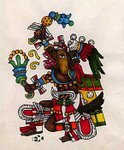
En los tankas, pinturas sacras del Himalaya, se dibuja posada sobre la luna plena en el centro de un loto, pie derecho extendido listo para actuar, el pie izquierdo cruzado sobre el regazo en meditación, la mano derecha extendida hacia la tierra en mudra, gesto, de bondad, la mano izquierda elevada en gesto de protección con un loto azul, signo del sanar.

La luna plena esta noche va y viene entre la neblina veraniega de la Bahía de San Francisco como mantra en la mente de la Tierra, la Tara Verde de la noche calmando angustias y temores, consolando los males.

-----------Madre de la sabiduría compasiva,
-----------danos el valor y las fuerzas
-----------para actuar de corazón,
-----------cultivar en nosotros mismos el loto azul
-----------sanándonos a si mismos y a la Tierra.
-----------Nos ahogamos en temores, en angustias
-----------que no nos sirven de nada
-----------y son muchas las heridas, los males.
-----------Danos los sueños capaces
-----------de abrir las puertas de un futuro
-----------más bondadoso y más justo.
-----------Enséñanos, Madre,
-----------
a bailar unos con los otros,
-----------con nuestros hermanos los otros animales,
-----------con las plantas, con las piedras,
-----------con el aire, el fuego, el agua, la tierra,
-----------con los luceros.

La luna va y viene entre la neblina como mantra en la mente de la Tierra.


© Rafael Jesús González 2009


--------------------------------for my compadres John & Cindy


It is told that from two tears the Buddha of compassion shed in pity of terrestrial suffering were born two Taras, feminine bodhisattvas, goddesses of wisdom and compassion — from the tear of the left eye, the Tara of the complexion of the whitest pearl, the peaceable Tara; from the one of the right eye, the Tara of the complexion of pale jade, the Green Tara, the fierce Tara. Both goddesses of compassionate wisdom, it is the Tara Green as hope who reigns over acts of charity, the one of the most tender heart, nearest to the Earth, of the fierce compassion.

In the tankas, the sacred paintings of the Himalayas, she is drawn seated on the full moon at the center of a lotus, right foot extended ready to act, the left foot crossed on her lap in meditation, the right hand extended toward the Earth in
mudra, gesture, of kindness, the left hand raised in the gesture of protection with a blue lotus, sign of healing.

The full moon tonight comes and goes in the summer fog of San Francisco Bay like a mantra in the mind of the Earth, the Green Tara of the night calming anxieties and fears, consoling ills.

------------Mother of compassionate wisdom,
------------grant us the courage & strength
------------to act from the heart,
------------to grow in ourselves the blue lotus
------------healing ourselves and the Earth.
------------We drown in fears & anguish
------------that don’t serve us well
------------& many are the wounds & the ills.
------------Grant us the dreams able
------------to open the doors of a future
------------more kind & more just.
------------Teach us, mother,
------------
to dance with each other,
------------with our brethren the other animals,
------------with the plants, with the stones,
------------with the air, the fire, the water, the earth,
------------with the stars.

The moon comes and goes in the fog like a mantra in the mind of the Earth.


© Rafael Jesús González 2009
-

Friday, June 5, 2009

Federico García Lorca 6/5/1898 - 8/19/1936


-


---------Sevilla de las Escobas

-------------------------a Federico García Lorca


Cuidado Sevilla que vas a perder el alma;
la Taberna de las Escobas ya está cerrada.

Hay sólo ecos en la solera
y donde corrían los finos,
amontillados y olorosos
está un ángel, piel de escarcha
con un copón de sollozos.

Cuidado Sevilla mía, Sevilla de los gitanos
que en el rincón de guitarras
sólo hay papeles floreados.

Lope con elegante ademán bebe su solera fina
dando la espalda a Byron y Béquer
que se disputen el amor de La Giralda.
Cervantes y Dumas discuten en laberintos de sueños
el hecho que la taberna fue violada por sus dueños.

(En el portón del Patio de las Naranjos
los santos de piedra guardan
sus silencios almidonados.)

El cardenal arzobispo trata de ocultar
bajo su casulla de oro
el tiritar de pericos y la luz de su tesoro.

¡Ay! hija de La Giralda, Sevilla enamorada,
la Taberna de las Escobas ya está cerrada;
un azulejo malhecho lo hace de epitafio oscuro
donde un barbero burlón se mira fumando un puro.

Allá en el Cortijo de Frías los condes cantan borrachos
y en el puente de San Telmo el río se cruza de brazos
mientras al pie de la Torre del Oro
se enamoran los muchachos.

¡Ay! Sevilla de naranjos, de aceitunas y claveles
ni bulerías ni soleares podrán cambiarte la suerte.

(En la sala capitular al centro de la cabeza
tengo un concilio de duendes
para canonizar la taberna.)


-----------------------© Rafael Jesús González 2009


(Isla Negra, Casa de Poesia y Literatura 5/6/09, Buenos Aires;
Director Gabriel Impaglione; derechos reservados del autor)


-----------Seville of the Brooms

---------------------------to Federico García Lorca


Take care, Seville, or you will lose your soul;
the Tavern of the Brooms is now closed.

There are only echoes in the cellars
& where ran the finos,
amontillados & olorosos
there is an angel, skin of frost
holding a goblet of sighs.

Take care my Seville, Seville of the gypsies
for in the corner of the guitars
there are only flowered papers.

Lope with elegant demeanor drinks his fine sherry
turning his back on Byron & Béquer
who dispute their love of La Giralda.
Cervantes & Dumas discuss in labyrinths of dreams
the fact that its owners violated the tavern.

(On the gate of the Patio of the Oranges
the stone saints keep
their starched silence.)

The Cardinal Archbishop tries to hide
under his chasuble of gold
the tittering of parrots & the light of his treasure.

Oh, daughter of La Giralda, enamored Seville,
the Tavern of the Brooms is now closed;
an ill-made tile stands for dark epitaph
where a mocking cigar-smoking barber looks at himself.

There in the Cortijo de Frías the counts sing drunkenly
& on the bridge of San Telmo the river crosses its arms
while at the foot of the Tower of the Gold
the boys fall in love.

Oh, Seville of oranges, of olives, & of carnations
not bulerías nor soleares will be able to change your fate.

(In the chapter chamber in the center of my head
I hold a council of gnomes
to make the tavern a saint.)


-----------------------------© Rafael Jesús González 2009


Thursday, May 28, 2009

Enigma of Signals

-

-----Enigma de señales


En Viena un día nublado
en un muro gris de un palacio
donde yacen
----el penacho de Moctezuma
----y el escudo de Ahuítzotl
vi a una mariposa girar
sus alas gris y escarlata.
No entendí su sistema de señales
y fue tan perfecto su silencio
que los automóviles se ahogaron
en la luz de sus cristales.


----------© Rafael Jesús González 2009


(Cuévano, año II, no. 5, agosto 1997, México D.F.;
© derechos reservados del autor)


----------Enigma of Signals


In Vienna on a cloudy day
on the gray wall of a palace
wherein lie
----the feather crown of Moctezuma
----& the shield of Ahuitzotl
I saw a butterfly wave
its gray & scarlet wings.
I did not understand its system of signals
& so perfect was its silence
that the automobiles drowned
in the crystals of its light.


------------------© Rafael Jesús González 2009


(Nimrod International Journal Vol. 52 no. 2, Spring/Summer 2009;
author’s copyrights)


-


-

Monday, May 25, 2009

Memorial Day


Celebrating Memorial Day we remember those fallen on the battle field — and also the, more-often-than-not, foolish and/or villainous reasons for the wars in which they fell. Major among such is the continuing illegal, immoral, and untenable U.S. occupation in Iraq . Grieving for those who die in perpetual wars, both combatants and civilians, I share with you some thoughts from my notebook from the summer of 2006 when I was in Washington D.C. and visited the Vietnam War Memorial. We again find ourselves as a nation in a continuing war that wastes lives and resources.
-

Reflections on the Wall


My first day in Washington D.C., in the heat of August, straight from the Museum of the American Indian, wearing my T-shirt picturing the Apache Jerónimo and his armed companions and reading, “Homeland Security, Fighting Terrorism since 1492”, I walk down the Mall, skirt the obelisk of the Washington Monument, down the reflecting pool, past the white marble Greek temple of the Lincoln Monument, to the Viet-Nam Wall —a pilgrimage to the memorial to “my war,” mine not because I fought in it, but because I fought against it — heart, mind, and soul.

My intent, a kind of penance, like saying the rosary, is to start at one end to the other and read each and every one of the 58,245 names, imagining a face, an age, a history, a life. I know it will be hard, but do not think it impossible (not one of the five million names of the Vietnamese dead are even alluded to.) I start with one name, John H. Anderson Jr. (PFC, 19 years of age, dead May 25, 1968, I later look up in the log), then several, increasing exponentially. It becomes more and more difficult to focus, the faces, the figures of families, lovers, tourists reflected moving against the mirroring black granite Wall is a distraction, their chatter, at times their laughter, an intrusion upon my meditations. As the Wall grows longer, rises higher and higher toward the center, the names crowd upon each other, pile up high and tight, at times difficult to distinguish, I do not know if for the numbers, the height, for the glare of the sun, or for the tears welling in my eyes. The names, the letters blur, run together.

I begin to skim, to let my attention chance upon a name, a Smith, a Cohen, a Bankowski, an O’Mally, a Chan, certainly a González here and there — every European and many another culture represented by a name. How came they to be there, what history of need, what myth or dream of theirs, or of some recent or distant ancestor, brought them to be “American” and die in a war without sense or reason?

After a time my reading becomes cursory, I occasionally stop, kneel to pick up and read a letter, a note of testimonial — of love, of remembrance — left at the foot of the Wall by some surviving wife, sweetheart, mother, father, son, daughter, nephew, niece, friend. A flag here and there, a flower (mostly artificial, a few in soda bottles, wilting in the heat.)

My mind gradually becomes numb, at times almost hallucinatory, wonders —imagines seeing the name there of a moneyed coward with powerful political connections that now inhabits a white house not far away.

* -----*----- *

They say the dead live on for as long as they are remembered. How many of these names etched here are still remembered? A few people, holding scraps of paper against the black stone make rubbings. Most hurry by, the kids impatient to reach the end, the names picked there not interesting enough to hold their attention. The names.

Last year, Xochipilli, my men’s ritual group, in collaboration with the ‘Faces of the War Project,’ created an ofrenda to the Victims of War, for the Días de los Muertos Community Celebration at the Oakland Museum of California. The ofrenda stood against the walls lined with the photographs and names of the U. S. soldiers dead in Iraq, the names, without the photographs, of the Iraqi dead. The names, still fresh, living in recent memory. Another war, as senseless, as irredeemable as that of Viet-Nam. I am tired, my face wet with sweat and tears I do not bother to wipe away. Tourists look at me, respectfully keep their distance, look away. They sense that this, that of Viet-Nam, is my war; I do not know if my shirt gives them a clue as to why.

* -----*----- *

I reach the other end of the Wall, Jessie Charles Alba (Sgt., aged 20, dead May 25, 1968, the middle of the war.)

* -----*----- *

Retracing my way up the reflecting pool, I must climb the steps of the Lincoln Memorial from which Marian Anderson once sang, from which Martin Luther King, Jr. spoke of his dream. I stand before the colossal figure of Lincoln enthroned and read his words chiseled into the white marble to his right: “ . . . a government of the people, for the people, by the people . . .” A pious hope devoutly to be wished.
-
Washington D.C.; August 15, 2006


© Rafael Jesús González 2009
-

.Memorial Day at Arlington National Cemetery


Celebrando el Día de la Conmemoración recordamos a los caídos en el campo de batalla — y también las, más que menos, razones necias y/o villanas por las guerras en que calleron. Mayor entre tales es la presente ilegal, inmoral e insostenible ocupación de los Estados Unidos en Irak. Lamentando aquellos que mueren en guerras perpetuas, ambos combatientes y civiles, comparto con ustedes algunos pensamientos de mi cuaderno de notas del verano de 2006 cuando estuve en Washington D.C. y visité el monumento a la guerra en Vietnam. Una vez más nos encontramos como nación en un guerra continua que desperdicia vidas y recursos.


Reflexiones sobre el Muro


El primer día en Washington D.C., en el calor de agosto, justo del Museo del Indio Americano, llevo mi camiseta con la imagen del apache Jerónimo y sus compañeros armados que lee, “Homeland Security, Luchando contra el Terrorismo desde 1492.” Camino por la alameda, el Mall, rodeo el obelisco del monumento a Washington, sigo la alberca, paso el templo griego de mármol blanco del monumento a Lincoln, al Muro de Vietnam — peregrinaje al monumento a “mi guerra,” mía no porque luché en ella, sino porque luché en oposición de ella — corazón, mente y alma.

Mi intención, un tipo de penitencia, como decir el rosario, es empezar de una punta a la otra y leer cada uno y todos los 58, 245 nombres, imaginándome un rostro, una edad, una historia, una vida. Sé que será difícil, pero no lo creo imposible (ni siquiera se alude ni a uno de los cinco millones de nombres de los vietnamitas muertos.) Empiezo con un nombre, John H. Anderson Jr. (PFC, 19 años de edad, muerto el 25 de mayo 1968, más tarde busco en la lista), luego varios, aumentando exponentemente. Se me hace más y más difícil enfocarme, las caras, las figuras de familias, amantes, turistas reflejados moviéndose contra el espejo del Muro de granito negro es una distracción, su parloteo, a veces su risa, una intrusión en mis meditaciones. A grado que el Muro se hace más largo, se eleva más y más alto hacia el centro, los nombres se amontonan uno sobre el otro, se amontonan alto y apretado, a veces difíciles de distinguir, no sé si por la cantidad, la altura, el relumbre del sol o las lágrimas que me llenan los ojos. Los nombres, las letras se borran, se corren una contra la otra.

Empiezo a pasar los nombres por en cima, dejar mi atención caer sobre un nombre u otro, un Smith, un Cohen, un Bankowski, un O’Mally, un Chan, indudablemente un González aquí y allá — toda cultura Europea y muchas otras representadas por un nombre. ¿Cómo llegaron a estar allí, que historia de necesidad, que mito o sueño suyo, o de algún antepasado reciente o lejano, los trajeron a ser “americano” y morir en una guerra sin sentido o razón?

Después de algún tiempo mi lectura se hace superficial, paro de vez en cuando, me arrodillo a levantar y leer una carta, una nota de testimonio — de amor, de recuerdo — depositada al pie del Muro por algún sobreviviente, esposa, novia, madre, padre, hijo, sobrino, sobrina, amigo. Una bandera aquí y allá, una flor (la mayoría artificiales, unas cuantas en botellas de refresco, marchitándose en el bochorno.)

La mente se me entume gradualmente, a veces casi halucinante, se desvía — imagina ver allí el nombre de un cobarde adinerado con conexiones políticas poderosas que ahora habita una casa blanca no lejos de aquí.

* ------*------ *

Dicen que los muertos viven mientras sean recordados. ¿Cuántos de los nombres aquí grabados son aun recordados? Algunas personas, poniendo trozos de papel contra la piedra negra hacen borradores. La mayoría se apresuran, los muchachos impacientes a llegar al final, los nombres cincelados allí no lo suficiente interesantes para captarles la atención. Los nombres.

El año pasado, Xochipilli, mi grupo de hombres dedicado a la ceremonia, en colaboración con el ‘Proyecto Rostros de la Guerra’, montó una ofrenda a las víctimas de la guerra para la Celebración Comunitaria del Día de Muertos en el Museo de California en Oakland. La ofrenda se puso contra las paredes cubiertas de las fotografías y nombres de los soldados estadounidenses muertos en Irak, los nombres, sin fotografías, de los muertos Iraki. Los nombres, aun frescos, vivientes en la memoria reciente. Otra guerra, tan insensata, tan irredimible como la de Vietnam. Estoy cansado, la cara húmeda de sudor y llanto que no me preocupo de limpiar. Me miran los turistas, respetuosamente guardan la distancia, alejan la mirada. Sienten que esta, la de Vietnam, es mi guerra; no sé si mi camiseta les sugiera por que.

* ------*------ *

Llego al otro extremo del Muro, Jessie Charles Alba (Sgt., 20 años de edad, muerto el 25 de mayo 1968, a mediados de la guerra.)

* ------*------ *

Retrazando mis pasos a lo largo de la alberca, me siento obligado a subir los escalones del monumento a Lincoln desde los cuales Marian Anderson una vez cantó, desde los cuales Martin Luther King, Jr. habló de su sueño. Paro ante la figura colosal de Lincoln entronizado y leo sus palabras cinceladas en el mármol blanco a su derecha: “. . . un gobierno del pueblo, para el pueblo, del pueblo . . .” Esperanza pía devotamente anhelada.
-
Washington D.C.; 15 de agosto 2006


© Rafael Jesús González 2009-
-

Thursday, May 21, 2009

Gemini

-
-
------------Géminis

Los gemelos,
él con collar de esmeraldas,
ella con collar de perlas,
arrullan en sus brazos
------al aire inconstante
y en sus manos llevan
puños de azogue inquieto.
Miden la dualidad
y en su intelecto brillan
las luces lejanas de Mercurio.


----© Rafael Jesús González 2009


-------------Gemini

The twins,
he with a collar of emeralds,
she with a collar of pearls,
rock in their arms
------the inconstant air
& carry in their hands
fistfuls of restless quicksilver.
They measure duality
& in their intellect shine
the faraway lights of Mercury.


---------© Rafael Jesús González 2009
-

Sunday, May 10, 2009

Mother's Day

-


----------------------Las Cobijas

--------------------------------------a Carmen González Prieto de González


Son olas las cobijas que me tejió mi madre;
sus manos las ondean,
manos jóvenes, uñas color, olor, forma de almendras;
manos maduras, fuertes, decisivas;
manos ancianas como arañas ciegas y precisas.
Cuenta y cuenta puntadas el gancho de la aguja,
cuentos de nunca acabar;
parece que crecen las cobijas,
----------------------------------se alargan
y amenazan inundar la casa.

Son una mezcla de sarapes de Saltillo
y tablas huicholas suaves y flexibles
con franjas coloridas anchas y ondulantes.
En sus pliegues y dobleces
parecen desplegarse las leyendas de los soles,
los cuentos de las creaciones,
las historias de los mundos y los dioses.
Son telas, redes de mil colores
para atrapar los sueños como peces
en los mares obscuros de las noches.
Hechizos de mi madre, adivinanzas,
misteriosos criptogramas de sus pensares,
¿qué penas amenguaban, que temores?
¿Qué sueños, qué recuerdos, qué emociones
guiaban sus dedos veloces y precisos
contando puntadas, produciendo estas mareas
de estambres pavorreales?

Ya muerta, sus manos quietas bajo tierra,
en mis sueños siguen creciendo las cobijas
y en las noches de invierno
cuando la lluvia gris asota las ventanas,
aun me abriga con arcos iris
mi madre.


--------------------------© Rafael Jesús González 2009


(Siete escritores comprometidos: obra y perfil; Fausto Avendaño, director;
Explicación de Textos Literarios vol. 34 anejo 1; diciembre 2007;
Dept. of Foreign Languages; California State University Sacramento;
derechos reservados del autor.)


-------------------The Blankets

----------------------------------a Carmen González Prieto de González

The blankets my mother knit for me are waves;
her hands stir them,
young hands, nails the color, smell, shape of almonds;
mature hands, strong & decisive;
old hands like spiders blind & precise.
The hook of the needle counts & counts stitches,
stories without end;
it seems the blankets grow,
-------------------------------stretch,
& threaten to flood the house.

They are a cross between sarapes of Saltillo
& Huichol yarn paintings, pliant & soft
with wide & undulating colored bands.
In their pleats & folds
there seem to unfold the legends of the suns,
the creation stories,
the histories of the worlds & of the gods.
They are weavings, nets of a thousand colors
to trap dreams like fishes
in the dark seas of the nights.
Spells of my mother, riddles,
mysterious cryptograms of her thoughts;
what pains did they comfort, what fears?
What dreams, what memories, what feelings
guided her fingers fast & precise
counting stitches, producing these tides
of peacock yarns?

Now dead, her hands still beneath the earth,
in my dreams the blankets still grow
& in the winter nights
when the gray rain whips the windows,
my mother still covers me
with rainbows.

----------------------------© Rafael Jesús González 2009
--


Saturday, May 9, 2009

Full moon: Blaming the Moon

-
-------Culpando a la luna

La luna se ha de haber mofado
de los versos de Kanzan
e ignorado con desdén
la riza de Jitoko
y cuando intentando abrazarla
reflejada en el agua
Li Bai borracho se ahogó
ella ha de haber pensarlo loco.

Pero aun ¿seremos locos
en culparla por la locura?


--------© Rafael Jesús González 2009


--------Blaming the Moon

The moon must have mocked
the verses of Kanzan
& ignored with disdain
the laughter of Jittoko,
& when, attempting to embrace her
reflected in the water,
drunk Li Po drowned
she must have thought him mad.

Yet, are we mad
to blame her for our madness?


--------------© Rafael Jesús González 2009
--